Monthly seasonal guide
What to grow this month
Region-aware planting, harvesting, tasks and pest watch — generated for your specific place and month.
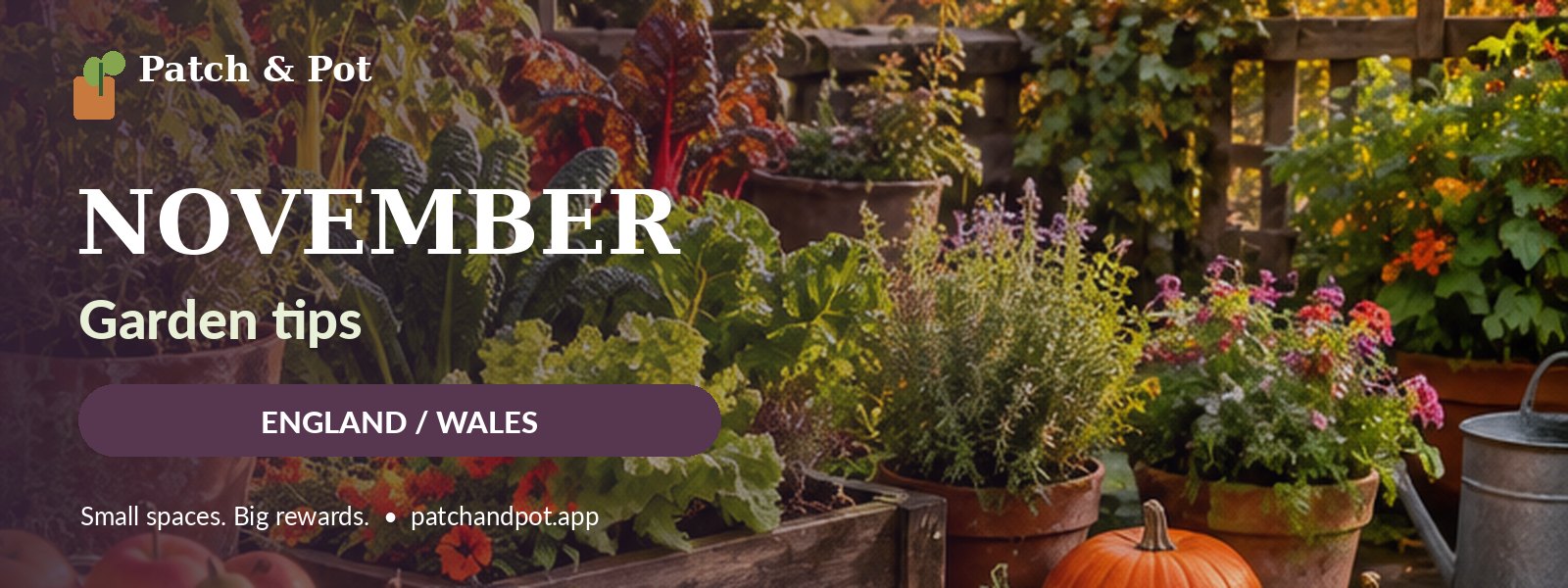
England & Wales
Mild pockets, colder uplands and winter prep.
November is for harvesting hardy crops, planting garlic and bare-root fruit where conditions allow, and keeping containers dry, sheltered and productive. Growing slows sharply as daylight fades.
Climate differences
- ENGLAND | SOUTH & COAST: Sheltered, free-draining sites can support outdoor overwintering broad beans and garlic.
- ENGLAND | NORTH & UPLANDS: Earlier frost and cold soil: start broad beans and garlic in modules under cover.
- WALES | WEST & COAST: Mild maritime conditions can be very wet/windy: protect pots and avoid saturated soil.
- WALES | UPLANDS & EAST: Upland frost arrives sooner; sheltered eastern valleys can retain a longer window.
What to sow
- Broad beans: Overwintering varieties outdoors in mild, free-draining areas, under cloches if needed; modules in cold districts.
- Microgreens: Cress, mustard and pea shoots on a bright windowsill; reliable for very small spaces.
- Winter leaves: Keep existing protected lettuce, corn salad and spinach cropping; fresh outdoor sowings grow slowly now.
What to plant
- Garlic: Cloves outdoors in mild, well-drained spots, otherwise into modules in a cold frame.
- Bare-root fruit: Compact fruit bushes, raspberry canes and patio fruit trees, avoiding frozen or waterlogged soil.
- Spring bulbs: Plant tulips in deep containers; use grit and drainage holes to avoid wet compost.
What to harvest
- Winter vegetables: Leeks, kale, Brussels sprouts, winter cabbage, chard and protected salads.
- Roots: Carrots, parsnips, swede and celeriac; mulch roots left in the ground.
- Stored crops: Check apples, pears, potatoes and squash regularly and use damaged produce first.
Pest watch
- Slugs in mild spells: Inspect protected winter salads after rain; tolerate light cosmetic damage.
- Brassica pests: Pigeons, cabbage whitefly and mealy cabbage aphid can remain troublesome.
- Vine-weevil grubs: Look for root damage in pots that wilt despite moist compost.
- Leek problems: Inspect leeks for rust or mining damage; use insect mesh where a local problem persists.
Top 3 tasks
- Plant for next year: Plant garlic and overwintering broad beans where conditions suit; use modules elsewhere.
- Harvest and protect: Pick winter crops, secure brassica netting and move tender pots out of exposed spots.
- Build healthy soil: Mulch bare beds, make leafmould and leave safe wildlife refuges over winter.
Companion combinations
- GARLIC + WINTER LETTUCE: Separate or generous shared containers make good use of winter space.
- KALE + THYME: Use adjacent pots for diversity; keep thyme well drained.
- STRAWBERRIES + CHIVES: Perennial companions for a roomy pot or neighbouring planters.
Local timing: The south/coast may stay mild, but northern, inland and upland gardens need earlier protection. Wet Welsh coasts need drainage even without severe frost.
These are practical space-sharing combinations, not proven pest repellents. Leave adequate root space, light and moisture for each crop. Research checked: 1 November 2026. Guidance is seasonal, not a live local weather forecast.
RHS November grow-your-own Garden Organic November RHS companion planting RHS vine weevil RHS slugs and snails
Good picks for autumn
From our library — tuned to what's worth starting in November. Set your region for picks tailored to your climate.
Nerine
Shimmering pink lily-stars in October when little else is flowering.
Michaelmas Daisy
Drifts of lavender-pink daisies in October — late nectar for bumblebees.
Radish
Ready to eat in just 4 weeks – fastest reward in gardening.
Sedum 'Autumn Joy'
Succulent plates that turn from pink to brick — September pollinator buffet.
Pick your region to see what to grow this month.
Choose your region